
In this article
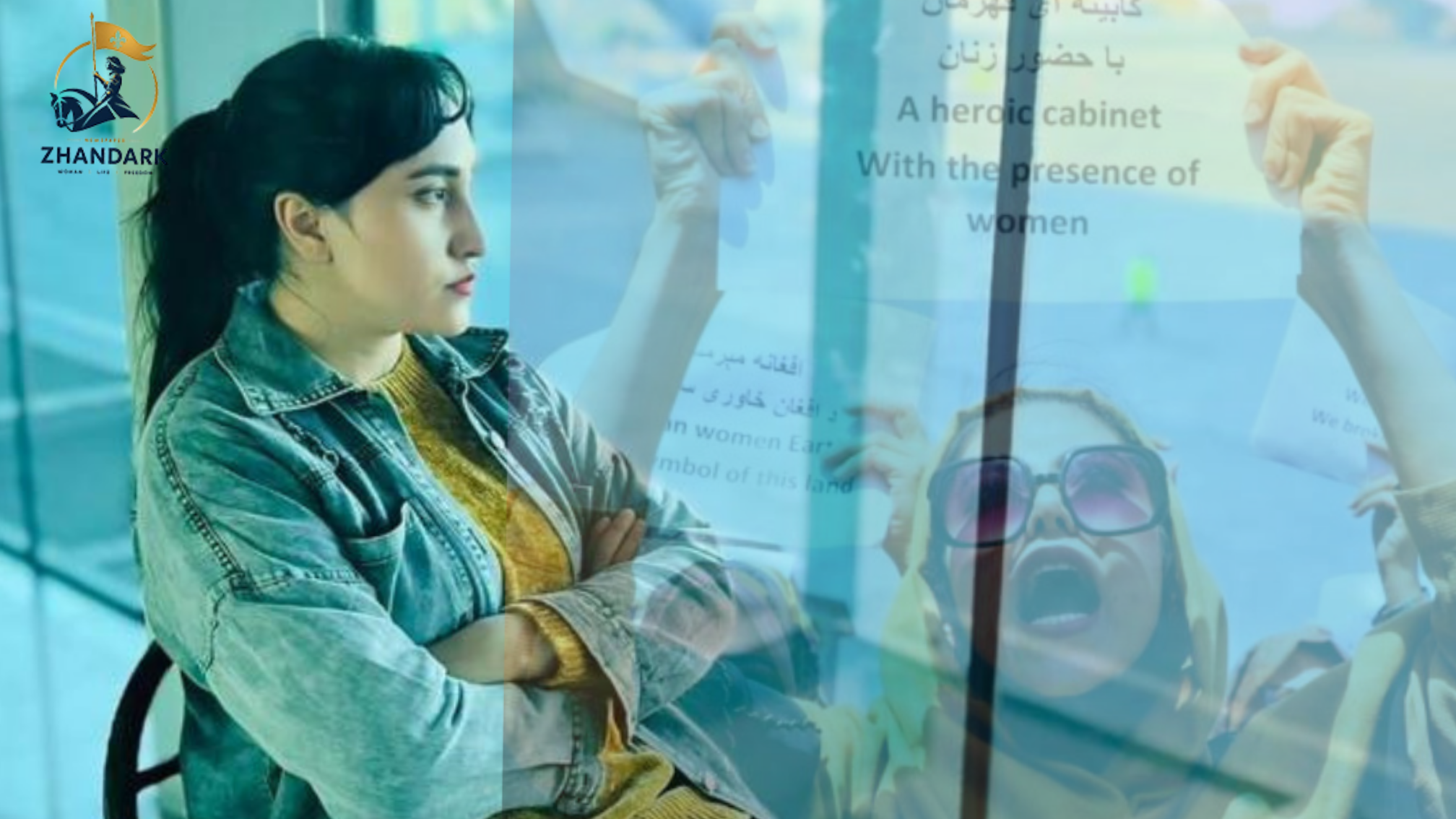
The life of Azizgul Afghanbek is a story of resilience in the face of restrictions and an unwavering commitment to defending Afghan women’s right to education and freedom—a journey that began in Kabul and continues through her human rights advocacy in exile.
Azizgul Afghanbek, a women’s rights activist and student protester, was born on October 12, 1999, in Maidan Wardak Province, Afghanistan.
She began her educational and social activism in Kabul and gradually became an active voice in promoting education and women’s rights.
On December 22, 2018, she graduated from Safa Township Girls’ High School in western Kabul. After successfully passing Afghanistan’s national university entrance examination (Kankor), she enrolled in the Educational Management program at Kabul Education University.
Alongside her studies, she volunteered in educational initiatives supporting women and children.
Despite her father’s opposition, she continued pursuing her education and social engagement, believing that meaningful social change begins within families and local communities.
In 2020, driven by her passion for civil engineering, she was awarded the competitive Linda Norgrove Scholarship and began studying Civil Engineering at Gawharshad University in Kabul.
She pursued two university degrees simultaneously, convinced that education is the most powerful tool for individual and social empowerment.
Following the Taliban’s return to power on August 15, 2021, and the sweeping restrictions imposed on girls’ education, she was forced to suspend her studies.
Rather than remaining silent, she joined the women’s protest movement on November 15, 2021, and became actively involved in demonstrations against the Taliban’s discriminatory policies.
She helped organize protests, held press conferences, wrote articles, participated in graffiti campaigns, and supported initiatives advocating for women’s rights.
During this period, Kabul’s streets became the stage for courageous women who, despite threats, arrests, and repression, raised their voices for freedom, justice, and the right to education.
After nearly eighteen months of civil activism, increasing security threats forced her to leave Afghanistan for Iran.
In 2023, she resumed her studies in Software Engineering at the University of Tehran while continuing her human rights advocacy.
On June 18, 2024, ongoing security challenges compelled her to leave Iran and relocate to Pakistan.
In Pakistan, she began collaborating with the German organization Move On, which supports Afghan refugees.
Through this collaboration, she referred approximately 150 Afghan women activists to the organization’s support programs.
Following changes in migration admission procedures, the network launched educational and employment initiatives specifically designed for Afghan women. As a result, around 30 women enrolled in German language courses, 15 secured Ausbildung (vocational training) contracts, and four women were successfully relocated from Pakistan to Germany. The initiative continues to support many more women.
Azizgul Afghanbek believes that even the smallest change can become the beginning of great hope.
Although she considers the migration of Afghanistan’s educated young generation deeply painful, she argues that political and social restrictions have left many women with no choice but to leave their homeland in order to continue their education, activism, and pursuit of a better future.
After arriving in France, she applied for asylum and has continued her work advocating for the rights of women, children, and migrant women.
Today, Azizgul Afghanbek is recognized as one of the prominent voices of civil resistance against structural discrimination and misogyny.
She believes that Afghanistan’s future must be built upon freedom, justice, equality, and the right to education for all citizens—especially women and children—rather than exclusion and oppression.
Although she has had to rebuild her life several times, she continues her journey with hope, transforming her experiences of migration, exile, and civil resistance into a powerful voice for hope, awareness, and the empowerment of Afghan women.